

Simple does not mean less
The meaning in a funeral comes from the people who gather and the person being remembered, not from how much is spent or how elaborate the arrangements are. A short, quiet service with a handful of people can hold as much love as a full church and a hundred mourners. What matters is that it feels honest.
Choosing simplicity often allows the important things to shine more clearly. Without a long list of formalities to manage, families can focus on a few meaningful moments, a favourite piece of music, a shared story, a walk to a special place. If you are weighing up how much to include, the Your Funeral Options Explained page sets out the range so you can decide what feels right.
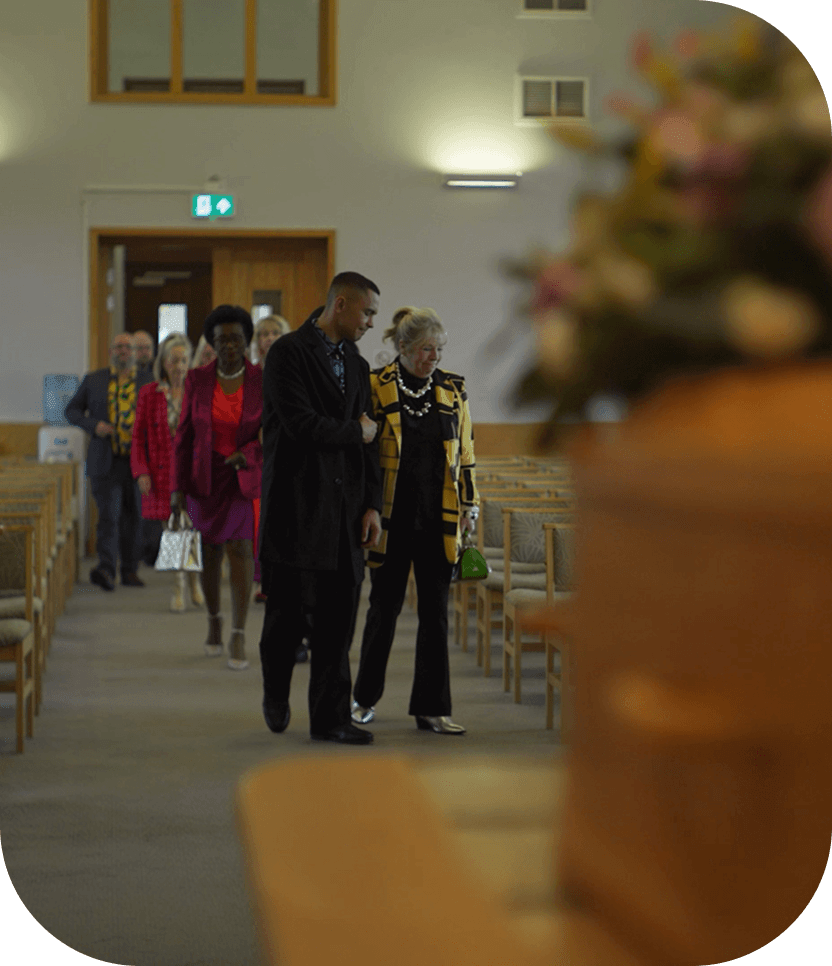
What makes a simple funeral meaningful
A simple meaningful funeral usually comes down to a few well chosen elements rather than many. One reading that truly fits, one song that captures the person or one photograph that everyone loves. When there is less, each thing carries more weight, and people remember it.
Personal touches matter more than expensive ones. Asking a grandchild to read a few lines, playing a song the person always sang, or gathering somewhere they loved can move people far more than any costly addition. The aim is to reflect the person honestly, so think about who they really were and let a small number of details speak for them. A caring funeral director can help you shape this, and the Bereavement Support and Advice pages offer further guidance on planning something personal.
Simple funeral ideas to consider
There are many gentle ways to keep a farewell simple while keeping it warm. A direct cremation followed by a relaxed gathering at home lets people remember in their own time. A short graveside or crematorium service with only close family can feel intimate and calm. A celebration of life in a favourite pub, garden or village hall can suit someone who disliked formality.
You might invite guests to share a single memory rather than arranging long formal tributes, or ask for a favourite flower from each person instead of large arrangements. None of these ideas cost a great deal, yet each creates something people carry with them. The right choice is simply the one that sounds like your loved one.
The practical route to a simple funeral starts with an honest conversation with a funeral director.
- By Terry Tennens, Chief Executive, SAIF
How to have a simple funeral
The practical route to a simple funeral starts with an honest conversation with a funeral director. Tell them you want to keep things simple and personal, and ask what that can look like and what it costs. A good independent director will welcome this and offer clear, transparent pricing so you can choose with confidence.
From there, decide on the few elements that matter most and let go of the rest without guilt. You do not need to justify keeping things modest, and you are free to decline anything that does not feel right for you. If cost is part of the decision, say so plainly, and your director will help you find a dignified option within your means. You can find one who works this way on the Find a Local Funeral Director page, and you can ask any question through the Contact and FAQs page.
Frequently asked questions
Can a simple funeral still be meaningful?
Yes. The meaning in a funeral comes from the people gathered and the person remembered, not from cost or scale. A short, personal service with a few well chosen moments can be deeply moving.
What is included in a simple funeral?
A simple funeral typically includes the essential care and a short service, without extras such as limousines or elaborate arrangements. You can still add personal touches like a favourite song, a reading or a meaningful location.
How do I plan a simple funeral?
Start by telling a funeral director you want something simple and personal, and ask what that involves and what it costs. Then choose the few elements that matter most to you and feel free to leave out the rest.
What is the difference between a simple funeral and a direct cremation?
A direct cremation has no service beforehand, with the cremation handled quietly, and families often hold a memorial later. A simple funeral usually includes a short service but keeps everything else pared back and affordable.
Is a simple funeral cheaper?
A simple funeral usually costs less than a traditional one because it leaves out extras, and a direct cremation is often the lowest cost option. A good funeral director will offer transparent pricing so you can see exactly what you are paying for.
Key takeaways
- A simple funeral can be just as meaningful as a large one, because meaning comes from people and memory, not scale.
- Choosing a few well chosen elements often makes each one more powerful and more memorable.
- Personal touches matter more than expensive ones, so let small details reflect who the person really was.
- Simple funeral ideas include a direct cremation with a gathering at home, an intimate service, or a celebration of life.
- To have a simple funeral, tell a funeral director what you want, choose what matters most, and leave out the rest without guilt.
A pared back farewell can still say everything
If you want something simple and true, an independent funeral director will help you shape it with care and clear pricing. Enter your postcode on the Find a Local Funeral Director page to begin.
The right funeral director will make you feel heard, respected and supported every step of the way.
Find a local funeral director
Use my current location