

What is direct cremation?
Direct cremation is a form of cremation that takes place without a funeral service or ceremony at the crematorium. Generally, there is also no option to view your loved one. The cremation happens privately, attended only by the crematorium staff. There are no mourners present, no service beforehand, and no formal farewell at the time of the cremation itself.
The ashes are returned to the family afterwards, usually within a few days to two weeks depending on the crematorium and the provider.
That is direct cremation in its most straightforward definition. But the picture is more nuanced than that, which is why so many families have questions about it, and why taking the time to understand it can make a difference.
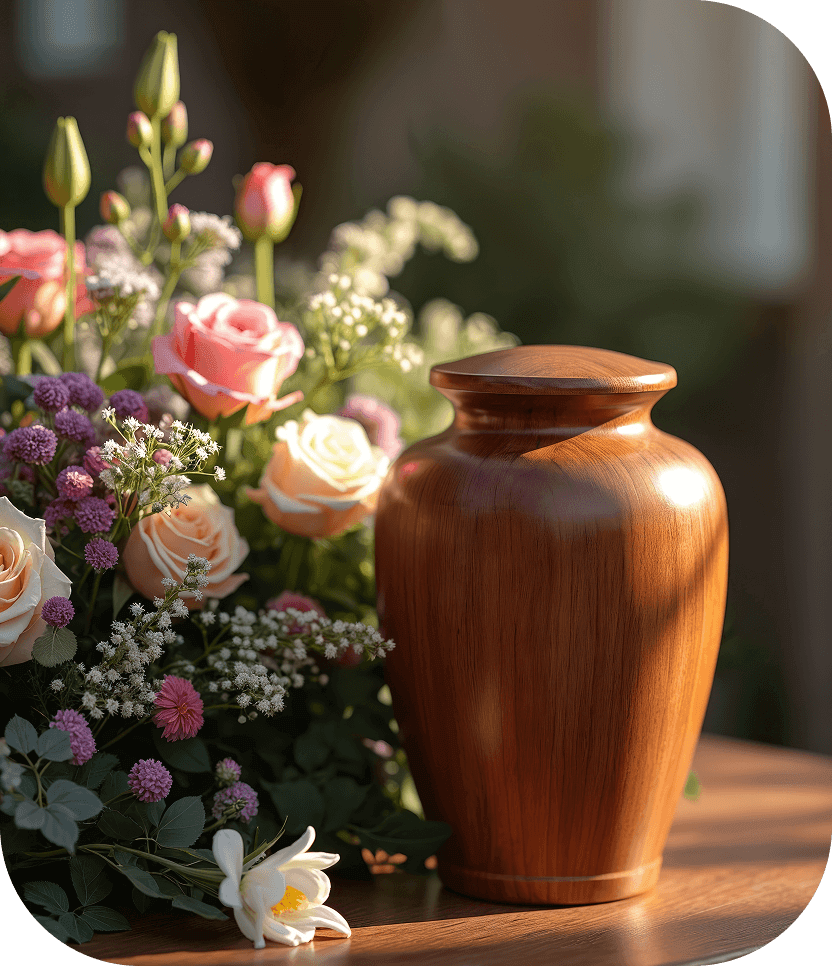
There is a common misconception that choosing direct cremation means choosing not to have any kind of farewell. That is a concern many families share; however it’s not the case.
- Terry Tennens, CEO, SAIF
What direct cremation does not mean
There is a common misconception that choosing direct cremation means choosing not to have any kind of farewell. That is a concern many families share; howeverDirect cremation and a memorial service are entirely separate things. Many families choose direct cremation precisely because it separates the practical side of the cremation from the gathering. This allows them to hold a celebration of life, a memorial service or a private family gathering at a time and place that suits everyone. It can be particularly meaningful when family and friends are spread across the country, when the deceased expressed a preference for simplicity, or when the family wants more time to plan something personal, without feeling rushed.The cremation being unattended does not make the goodbye any less real. What happens afterwards, the gathering, the stories, the space to grieve together, is often where the real farewell takes place.Can you attend a direct cremation?
This is one of the questions families ask most often, and the answer depends on the provider.Some direct cremation providers offer an unattended-only service, which means the cremation takes place privately with no option for family attendance. Others, particularly local, independent funeral directors, offer attended direct cremation, which allows a small number of family members to be present at the crematorium for a brief, informal gathering before or during the cremation.If being present at the cremation matters to your family, ask specifically about this when speaking to any provider. Not all direct cremation services are the same. The difference between attended and unattended can be significant for how a family feels about the choice later, and how they remember it.Is direct cremation disrespectful?
This is the question many families wonder about privately but feel reluctant to ask, even though it is a very natural concern. It is worth answering honestly.Direct cremation is not inherently disrespectful. The absence of a ceremony at the crematorium does not diminish the dignity with which a person is cared for. A reputable funeral director, whether offering direct cremation or a full traditional service, is committed to the same standard of care for the deceased throughout, with the same level of respect.What matters is that the choice is made genuinely, because it reflects the wishes of the deceased or the honest needs of the family, rather than made under financial pressure or in a moment of haste that is later regretted.Families who feel that a simple, private cremation followed by their own gathering is the right way to honour their loved one are making a completely valid choice. Families who feel that a service and a gathering at the crematorium matters are making an equally valid choice. Both deserve to be made with full information and without pressure.SAIF funeral directors will never push you toward any particular option. Their role is to give you accurate information about all the choices available and to help you find the one that is right for your family.
What happens during a direct cremation?
Understanding the process can help families feel more confident about their decision, and a little more at ease with what to expect. Here is what typically happens.
- Collection. The funeral director collects your loved one from the place of death, whether that is home, hospital or a care home, and brings them into their care.
- Care before the cremation. Your loved one is cared for at the funeral director’s premises while the necessary paperwork is completed. This includes the Medical Certificate of Cause of Death.
- The cremation. The cremation takes place at a local crematorium without a service or ceremony, though many providers will share the timing with the family if they wish to know.
- The ashes. The ashes are returned to the family, typically in a simple container, within a few days to two weeks. Families can choose to collect them, have them delivered, or discuss other arrangements with the funeral director.
The entire process from death to the return of ashes typically takes between one and three weeks, depending on the crematorium’s schedule and how quickly the paperwork can be completed.
What happens to the ashes after a direct cremation?
This is entirely up to the family. There is no obligation to decide immediately. There is time to think about what feels right. Ashes can be kept at home in a meaningful place, scattered at a location that held significance for the deceased (subject to any relevant permissions), interred in a cemetery or garden of remembrance, divided among family members, or incorporated into a lasting memorial item such as jewellery or artwork.
Many families who choose direct cremation find that deciding what to do with the ashes becomes a meaningful part of the memorial process, and something that can be approached together, at a pace that feels right.
Direct cremation: an honest look at the pros and cons
Direct cremation is not right for every family. Here is an honest assessment.
What families value about direct cremation
- Simplicity. The process is straightforward, with fewer decisions to make under pressure.
- Flexibility. Separating the cremation from the memorial means families can plan a gathering when they are ready, in a place that is meaningful to them.
- Cost. Direct cremation is generally less expensive than a full funeral service, which can matter significantly for families facing financial pressure.
- Alignment with wishes. Many people today express a preference for a simple send-off, and direct cremation can honour that.
What families sometimes find difficult
- The absence of a formal farewell at the time. Some families find it hard that there is no moment of gathering at the point of the cremation itself, particularly in the immediate days.
- Questions from wider family. Not everyone in a family may agree, and explaining the choice to older relatives can sometimes be challenging, especially when expectations differ.
- The risk of regret if chosen in haste. Families who choose direct cremation primarily because it seems like the quickest option, rather than because it genuinely reflects their wishes, sometimes wish they had taken more time.
- Not being able to visit or see their loved one.
The last point is worth emphasising. Direct cremation chosen thoughtfully is a completely valid choice. Direct cremation chosen under pressure, without full information, is more likely to leave families with unanswered questions later. This is why speaking to a local funeral director, who will take the time to explain all the options without pushing you toward any of them, matters so much.
Questions to ask any direct cremation provider
Not all direct cremation services are equal. Here are the questions worth asking before you decide.
- Is the service attended or unattended? Can I choose?
- Where will my loved one be cared for between the death and the cremation?
- Which crematorium will be used and can you tell me where it is?
- How long will the process take from the time of death to the return of ashes?
- Can I visit and see my loved one?
- What is included in the price, and what costs might be added?
- Will I have a dedicated point of contact, or will I be dealing with a call centre?
- Are you a local funeral director or a national provider?
The answers will tell you a great deal about the quality of care your loved one will receive, and about how supported your family will feel throughout. This can bring a great sense of reassurance.
Direct cremation and your wider options
Direct cremation is one option among several. Before making any decision, it is worth understanding the full picture. Many families are surprised by how many choices exist between a direct cremation and a traditional funeral service, once they begin to explore them.
A local funeral director can walk you through all of the options in a single conversation, without obligation and without pressure. Explore your funeral options
Whatever you decide, the most important thing is that the decision is made calmly, with full information, and in a way that your family can feel at peace with in the months and years ahead. That is what Handled With Care is here to support.
Frequently asked questions
What is the difference between direct cremation and a traditional funeral?
A traditional funeral typically includes a service or ceremony at a crematorium or place of worship, attended by family and friends, followed by cremation or burial. Direct cremation takes place without a service at the time of cremation. The ashes are returned to the family afterwards, and many families then hold their own memorial gathering separately.
Can family attend a direct cremation?
It depends on the provider. Some services are unattended only. Others, particularly local independent funeral directors, offer an attended option where a small number of family members can be present. Ask specifically about this before you decide.
Is direct cremation cheaper than a traditional funeral?
Direct cremation is generally less expensive than a full funeral service because it does not include a ceremony, hearse or formal service. However, costs vary between providers. Always ask for an itemised breakdown before committing.
What happens to the ashes after a direct cremation?
The ashes are returned to the family in a container, typically within a few days to two weeks. Families can choose to keep them at home, scatter them at a meaningful location, have them interred, or use them in a lasting memorial item. There is no obligation to decide immediately.
Is direct cremation legal in the UK?
Yes. Direct cremation is a fully legal option in the UK and is subject to the same regulatory requirements as any other form of cremation.
Key takeaways from this guide
- Direct cremation is a cremation that takes place without a service or ceremony at the time. It is not the same as choosing not to have a farewell. Many families hold a memorial gathering separately, at a time and place that suits them.
- Some providers offer attended direct cremation, where a small number of family members can be present. Ask specifically about this if it matters to your family.
- Direct cremation is a valid and dignified choice when made thoughtfully. The risk of regret increases when it is chosen under pressure rather than as a genuine expression of the family’s wishes.
- Not all direct cremation services are equal. Ask for transparent pricing, check who your main contact will be, and confirm which crematorium will be used.
- A local, independent SAIF funeral director can help you understand all your options before you make any decision.
Speak to someone local before you decide
Every SAIF funeral director listed on this site has been independently verified and is committed to giving you honest information without pressure. Enter your postcode to find a local professional near you who can help you understand all your options, in a way that feels clear and unhurried. Find a local SAIF funeral director near you
The right funeral director will make you feel heard, respected and supported every step of the way.
Find a local funeral director
Use my current location