

The first hours: what to do immediately when someone dies
What you need to do first depends on where the death has happened.
If someone dies at home
Call your GP or, if outside of office hours, the NHS 111 service. A doctor will need to attend to verify the death and then a doctor will issue a Medical Certificate of Cause of Death (MCCD) in the days following. If the death was unexpected or the cause is unclear, a doctor may refer the case to the coroner. This is a normal process and does not necessarily mean anything is wrong.
You do not need to move your loved one immediately. There is no rush, so take the time you need. It is okay to pause here.
If you are unsure of what to do in the immediate moment, you can call a local funeral director. SAIF members are available 24 hours a day, seven days a week, and a first call is simply a conversation. You are under no obligation to make any decisions. You can just talk things through. Find a local SAIF funeral director near you
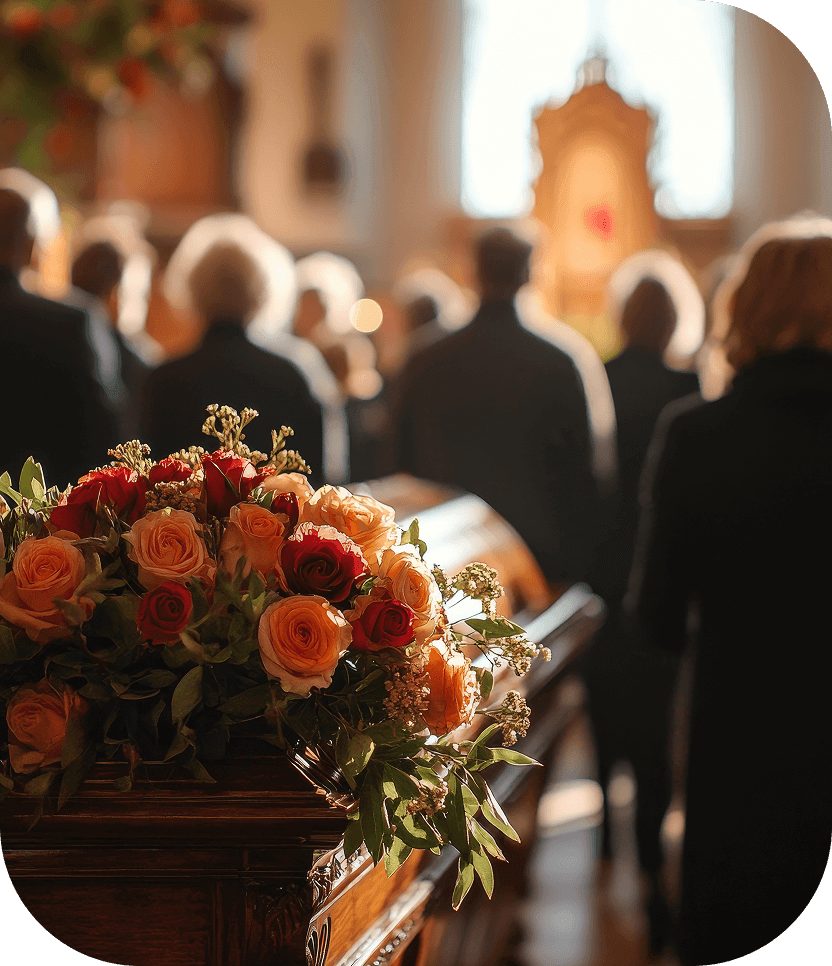
The moment someone dies, time feels both urgent and suspended. You are being asked to make practical decisions at the very moment when everything inside you wants to stop.
If someone dies in hospital
Hospital staff will guide you through the immediate process. A doctor will verify the death and the bereavement team will be in touch to explain the next steps, including when and how to register the death, and collect the Medical Certificate of Cause of Death.
There is usually no need to make decisions about the funeral on the day. The hospital will care for your loved one while you take the time you need. There is space to come back to things when you feel ready.
If someone dies in a care home or hospice
The care home or hospice will contact the relevant doctor to verify the death. Staff will support you and can help connect you with a local funeral director when you are ready. You don’t have to navigate this on your own.
Who to call first when someone dies
Once the death has been verified, your priority list broadly looks like this. You do not need to do everything at once, and the order may vary depending on your circumstances. You can move through this in your own time.
- A funeral director, to arrange collection of your loved one and begin making arrangements. A local, independent funeral director can help you understand all your options before you commit to anything. Find a local SAIF funeral director near you
- Close family and friends. Let people know in whatever way feels right for you. There is no obligation to tell everyone immediately.
- The deceased’s GP, if the death has not already been reported and only if applicable.
- An employer, if the deceased was still working.
- Any immediate financial or legal contacts, such as a solicitor, if there is a will to be located.
Many other notifications, including banks, insurers, pension providers and HMRC, can wait until after the funeral. The Tell Us Once service (more on this below) will take care of most government-related notifications in a single step.
Registering a death in the UK
This is a legal requirement. In England, Wales and Northern Ireland, you must register the death within five days of the MCCD being issued. It can be registered within eight days in Scotland.
Who can register a death?
Legally, a death can be registered by a relative of the deceased, someone present at the death, someone who was living at the same address, or the person arranging the funeral. In most cases, a close family member will register the death.
What do you need to bring?
The Medical Certificate of Cause of Death is the essential document. It is also helpful to bring the following, though they are not always required.
- Birth certificate
- NHS medical card
- Marriage or civil partnership certificate, if applicable
- Passport or driving licence
Where do you register a death?
You register a death at a register office, ideally in the district where the death took place. However, many offices now allow appointments in another district if that is easier for you. You will need to make an appointment as walk-in registration is rarely available. Your local register office can be found at www.gov.uk/register-a-death
What will you receive?
After registering, you will be given a death certificate. You can request multiple certified copies and most families need between three and six for legal and financial purposes. You will also receive a certificate for burial or cremation, which your funeral director will need. In most cased this will be emailed to your chosen funeral director
The Tell Us Once service
Tell Us Once is a government service that lets you notify multiple government departments about a death in a single contact, rather than making separate calls to each. It is free and available across most of England, Scotland and Wales.
Departments notified can include HMRC, the Department for Work and Pensions, the DVLA, the Passport Office and your local council. Your registrar will give you everything you need to use the service when you register the death
Arranging a funeral: understanding your options
You are under no obligation to arrange a funeral immediately. Before making any decisions, it is worth taking a moment to understand what is available. Families often have more options than they realise.
A local, independent funeral director can guide you through the choices without any pressure. They will take the time to understand what matters to your family and help you find a way forward that feels right for you. There is time to make a decision that feels considered and personal. Options range from a simple, unattended direct cremation to a full traditional funeral service, and everything in between. Explore your funeral options
Speaking to a local funeral director does not commit you to anything. It is simply a conversation, and often families find that talking it through makes the decision much clearer.
Practical matters in the days following a death
Beyond the registration and funeral arrangements, there are a number of practical matters that will need attention in the days and weeks ahead. These do not all need to be dealt with immediately. You can come back to them when you feel able.
Locating a will
If the deceased left a will, it needs to be located as soon as possible. Wills are sometimes held by a solicitor, stored at home or registered with a will storage service. If there is no will, the estate will be distributed according to the rules of intestacy.
Notifying financial institutions
Banks, insurance companies, pension providers and subscription services will all need to be notified. The Tell Us Once service handles government-related notifications. Financial institutions will need to be contacted separately and most will accept a death certificate as confirmation.
Claiming bereavement benefits
Depending on your circumstances, you may be entitled to bereavement benefits from the government. This includes a Bereavement Support Payment if you were married to or in a civil partnership with the deceased. The gov.uk website can provide further information.
Looking after yourself
None of this is easy. The practical steps in this guide can feel overwhelming when you are also grieving. You do not need to do everything at once, and support is available, both practical and emotional. It is okay to take things slowly.
SAIF funeral directors can connect families with local bereavement counsellors and support groups. A good local funeral director will be there throughout the process, not just in the arrangements, but in the days and weeks that follow. Someone will be there to support you when you need it. Bereavement support and advice
Frequently asked questions
Who do you call first when someone dies at home?
Call your GP or NHS 111 so a qualified person can verify the death and issue the Medical Certificate of Cause of Death in the days after. Once death is verified, you can contact a funeral director when you feel ready. SAIF members are available 24 hours a day if you need guidance straight away.
How long do you have to register a death in the UK?
You have five days to register a death in England, Wales and Northern Ireland once the MCCD has been issued, and eight days in Scotland. The death must be registered at the registrars for the local authority where the death has occurred
Do you have to arrange a funeral immediately?
No. There is no legal obligation to arrange a funeral straight away. Your loved one will be cared for while you take the time you need to make decisions that feel right for you and your family.
What is the Tell Us Once service?
Tell Us Once is a free government service that allows you to notify multiple government departments, including HMRC, the DWP, the DVLA and your local council, about a death in a single contact. Your registrar will provide the details when you register the death.
What support is available after someone dies?
A range of support is available, including bereavement counselling, local support groups and practical guidance from your funeral director. SAIF members can help connect families with trusted local services. Support and advice
Key takeaways from this guide
- Call your GP or NHS 111 to verify the death. A local funeral director is available 24 hours a day if you need support or guidance straight away.
- You have five days to register the death in England and Wales once the MCCD has been issued. Bring the Medical Certificate of Cause of Death to your local register office.
- Use the Tell Us Once service to notify government departments in a single contact.
- You do not need to arrange a funeral immediately. Take the time you need and understand your options before making any decisions.
- Support is available throughout the process, from practical guidance to bereavement counselling. You do not have to go through this alone.
Ready to take the next step?
When you are ready, a local, independent SAIF funeral director can guide you through every decision with care and without pressure. A simple conversation is often the easiest place to begin. Enter your postcode to find a verified SAIF member near you. Find a funeral director near you
The right funeral director will make you feel heard, respected and supported every step of the way.
Find a local funeral director
Use my current location