

What a funeral is really for
A funeral is often thought of as something we do for the person who died. In truth, much of its value is for the living. It gives a scattered group of people a single time and place to come together, to acknowledge a death and to begin to absorb it.
That gathering does something words alone cannot. It makes the loss real and shared, rather than private and abstract. When people stand together, tell stories and sit in silence, grief stops being a solitary burden and becomes something carried in company. This is part of why funerals have existed in every human culture for as long as we have records. Whatever form you choose, you can read about the range on the Your Funeral Options Explained page.
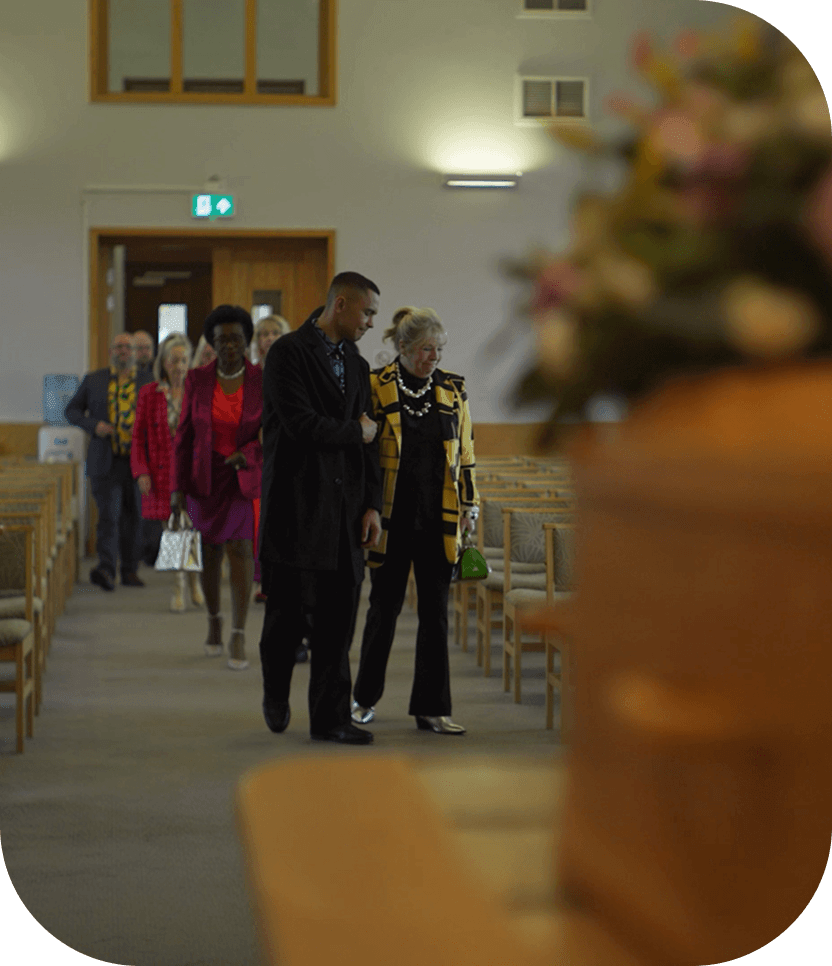
Why funerals matter for the living
Funerals matter because they mark a threshold. They draw a line between the time when the person was alive and the time after, and that line helps the mind and heart begin to adjust. Without any marker at all, some people find the loss harder to grasp, as though it never quite happened.A funeral also gives permission to feel. In ordinary life, grief is often hidden away. A funeral creates a space where sorrow is expected and accepted, where tears aren’t out of place, and where people can say out loud what the person meant to them. That release matters, and it’s difficult to find elsewhere. The importance of funerals lies less in their scale and more in this simple human function.The value of being together
One of the most overlooked benefits of a funeral is practical as well as emotional. It brings helpers to the door. When people gather, they check on the bereaved, offer support, and notice who is struggling.A quiet farewell with no gathering can mean those offers of help never arrive, simply because friends and community weren’t given a moment to step forward. This doesn’t mean a simple funeral is wrong. It means that if you choose one, it’s worth thinking about how the people around you will still come together at some point.A funeral creates a space where sorrow is expected and accepted, where tears aren’t out of place, and where people can say out loud what the person meant to them.
- By Terry Tennens, Chief Executive, SAIF
When simpler is the right choice
None of this is an argument against simplicity. A small, modest or quiet funeral can carry every bit as much meaning as a large one, and for many families it is exactly right. The size of a funeral has little to do with the depth of feeling behind it.
What matters is making the choice consciously rather than by default. If you choose a direct cremation, you can still plan a gathering later, scatter ashes together or hold a memorial in your own time. The aim is to keep the human purpose of a funeral, even when the form is pared back. If cost is part of your thinking, talking openly with a funeral director helps, and the Bereavement Support and Advice pages offer further guidance.
Choosing a farewell that fits
The right funeral is the one that reflects the person who died and serves the people who loved them. For some that means a full traditional service. For others it means a walk, a song and a scattering of ashes. Both honour the same underlying purpose.
A thoughtful funeral director will help you find that fit without pressure, explaining your options and giving you time to decide. This is where the care of an independent, local director shows itself most clearly. To understand more about the campaign behind this guidance, you can visit the Handled With Care homepage, and you can raise any question through the Contact and FAQs page.
Frequently asked questions
Why are funerals important?
Funerals give people a shared time and place to acknowledge a death, express grief and support one another. They help make a loss feel real, mark a threshold between before and after, and bring practical and emotional help to those who are grieving.
Do funerals help with grief?
For many people, yes. A funeral provides a space where grief is expected and accepted, which can help people begin to process a loss and feel less alone. The benefit comes from the gathering and acknowledgement rather than from the cost or scale.
Is it wrong to not have a funeral?
No. Choosing a simple farewell or a direct cremation is a valid choice, and many families do so thoughtfully. It can help to plan some form of gathering or memorial later so that people still have a chance to come together.
What is the purpose of a funeral?
The purpose of a funeral is to acknowledge a death, honour the person who died, and give the living a way to grieve together. It marks the loss publicly and allows friends and community to offer support.
Does the size of a funeral matter?
The size of a funeral has little to do with how meaningful it is. A small, quiet service can carry just as much love and significance as a large one, so the right size is simply the one that fits your family.
Key takeaways
- Much of a funeral’s value is for the living, giving people a shared way to acknowledge a death and grieve together.
- Funerals mark a threshold between before and after, which helps the mind and heart begin to adjust to a loss.
- Gathering brings practical and emotional support to the door, so a farewell with no gathering can leave help unoffered.
- A simple or quiet funeral can be just as meaningful as a large one, as scale has little to do with depth of feeling.
- The right farewell is the one that reflects the person who died and serves the people who loved them.
Find someone who will help you choose well
Whatever shape of farewell feels right, a caring director can help you honour it. Enter your postcode on the Find a Local Funeral Director page to speak to a trusted, independent funeral director near you.
The right funeral director will make you feel heard, respected and supported every step of the way.
Find a local funeral director
Use my current location